The biggest mistake homeowners make before an appraisal is either doing nothing or doing everything. Strategic improvements in the 30-60 days before your appraisal can significantly impact your home’s value, while others waste money and time.
Most homeowners don’t realize that innovative pre-appraisal home improvements typically add 5-15% to your home’s appraised value when done strategically. The key is understanding what catches an appraiser’s attention versus what sounds good in theory.
Kitchen Updates: Where Your Money Matters
Here’s what might surprise you: Minor kitchen improvements consistently deliver 70-80% ROI while major renovations often disappoint. Appraisers aren’t looking for magazine-worthy kitchens – they’re evaluating condition and functionality.
Cabinet condition makes or breaks a kitchen’s perceived value. You don’t need new cabinets, but you do need ones that look intentional. Fresh paint, quality hardware, and doors that align properly signal that this house has been maintained. Budget around $500-1,500 and you’ll likely see it reflected in your appraisal.
Countertops tell a story, too. Cracked laminate screams “deferred maintenance,” while even a professional refinishing job for $200-600 can completely transform the feel of a kitchen. Matching stainless appliances do add measurable value – typically $3,000-8,000 – but only when they make sense with the rest of the house’s quality level.
HVAC Systems: The Silent Value Killer
This catches homeowners off guard every time. An aging HVAC system can reduce your home’s appraised value by 5-10%, not because it doesn’t work, but because buyers see it as a looming expense.
Systems over 15 years old automatically become discussion points on appraisal reports. Even if they’re still chugging along, appraisers have to note their age and condition. The reality is that most buyers will factor replacement costs into their offers anyway.
But here’s the flip side: proactive HVAC replacement before appraisal can add substantial value. Modern, energy-efficient systems typically boost appraised value by $8,000-15,000 while positioning your home as genuinely move-in ready. For properties with aging systems, complete AC replacement demonstrates the kind of proactive maintenance that appraisers notice and buyers appreciate.
Fresh Paint: The $500 Game Changer
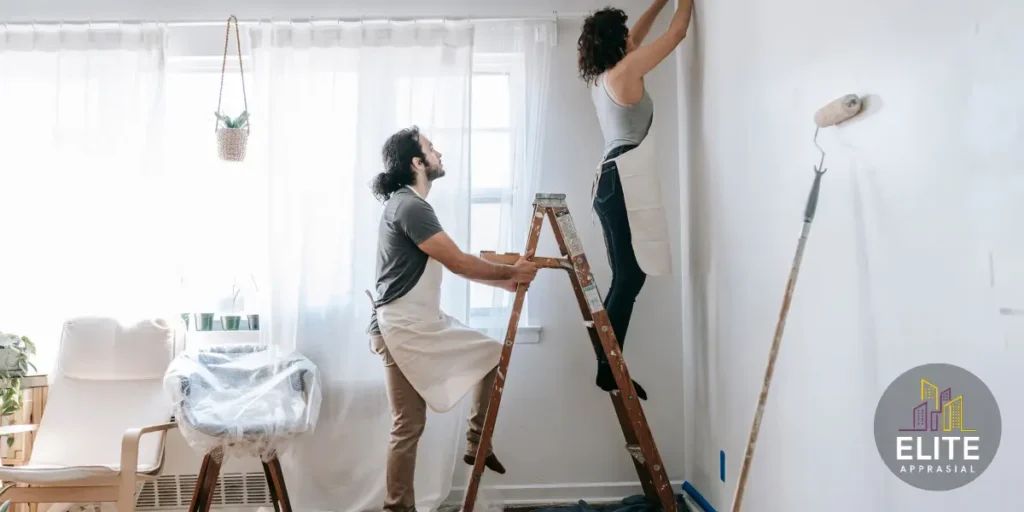
If there’s one improvement that punches above its weight class, it’s strategic interior painting. Professional painting of main living areas costs $500-2,000 and can increase perceived value by $3,000-6,000. The math just works.
Focus on the spaces that show wear – hallways, living rooms, and other areas with scuffs, crayon marks, or nail holes. These details don’t just look bad; they suggest the home hasn’t been adequately maintained. Clean, neutral walls create the opposite impression.
And please, stick to neutral colors. That lime green accent wall might be your favorite design choice, but it’s costing you money. Classic whites, grays, and beiges let potential buyers focus on your home’s actual features rather than your personal decorating preferences.
Bathroom Updates: Less Drama, More Impact
Bathrooms don’t need to be spa-like retreats to add value – they just need to function well and look clean. Updated fixtures, fresh caulking, and modern vanities can add $2,000-5,000 in value for investments of $1,000-3,000.
Replace cracked tiles, update dated fixtures, and ensure proper ventilation. New bathroom vanities and mirrors create an immediate positive impact without breaking the budget. Skip the significant layout changes – simple updates like new faucets, lighting, and fresh grout provide better returns than complete renovations this close to appraisal.
Curb Appeal: First Impressions Set the Tone
Appraisers are human. The impression they get walking up to your front door influences everything that follows. Professional landscaping, fresh mulch, and maintained walkways cost $500-2,000 but can shift the entire appraisal conversation.
Power washing works magic for almost nothing. Clean siding, driveways, and walkways cost $200-800 but can add $2,000-4,000 in perceived value. Window and door maintenance – fresh caulking, clean glass, functioning hardware – signals that someone cares about this property.
The “Don’t Bother” List
Some improvements sound smart but rarely pay off. Pool installations typically add only $5,000-15,000 in value despite costing $25,000-40,000 in most markets. Unless you’re in Florida or Arizona, pools often deter more buyers than they attract.
Over-improving for your neighborhood creates what appraisers call “functional obsolescence.” That $3,000 chandelier in a $200,000 house doesn’t make it worth $203,000 – it makes buyers wonder what else doesn’t fit.
Major renovations too close to appraisal? Bad idea. Bathroom additions, room expansions, or structural changes need time to cure and demonstrate quality artistry. Rushed projects often show defects that hurt rather than help your final valuation.
Timing and Budget Strategy
Complete improvements 30-60 days before your scheduled appraisal. This gives work time to settle and any issues to be resolved. Last-minute improvements that appear rushed create negative impressions.
Most homeowners should budget 2-5% of their expected home value for strategic pre-appraisal home improvements. Allocate about 60% to interior updates (kitchen, bathrooms, paint), 30% to curb appeal, and keep 10% in reserve for unexpected issues that always seem to pop up during renovation work.
Document everything with receipts and permits. Appraisers value documented upgrades more highly than undocumented work, especially for mechanical systems and structural improvements.

Common Questions Homeowners Ask
Q: How much should I spend on improvements?
A: The sweet spot is usually 2-5% of your expected home value. More than that, and you risk over-improving for your neighborhood. Less than that, and you might miss opportunities for easy value gains.
Q: Which improvements give me the biggest bang for my buck?
A: Fresh paint almost always wins, followed by minor kitchen updates and curb appeal improvements. Focus on condition and cleanliness rather than luxury upgrades.
Q: Do I need permits for this work?
A: Any electrical, plumbing, or structural work requires permits. Unpermitted work can hurt your appraisal if discovered. Don’t cut corners here.
Q: Should I be home during the appraisal?
A: Generally, no. Make sure the house is clean, well-lit, and accessible, then let the appraiser work independently. Your presence can be distracting.
Q: What if I discover problems during improvements?
A: This is why you keep 10% of your budget in reserve. Hidden issues often emerge during renovation work. Address them properly rather than covering them up.
Q: Do small details matter to appraisers?
A: Absolutely. Appraisers are trained to notice maintenance issues, quality of artistry, and overall condition. Fresh caulking, clean fixtures, and proper paint coverage all contribute to the final valuation.
The bottom line: strategic pre-appraisal improvements are about smart choices, not big budgets. Focus on the basics that signal good maintenance – fresh paint, functional systems, and clean presentation – rather than expensive upgrades that won’t move the needle. When done thoughtfully in that 30-60 day window, these targeted improvements can add thousands in appraised value while positioning your home as genuinely move-in ready.
For more detailed guidance on maximizing your property’s appraised value, explore our comprehensive appraisal insights covering market trends, valuation factors, and professional appraisal strategies that help homeowners make informed decisions.